Date of walk – 13 October 2026
This post contains information and findings from a plant identification walk in 2CRU. Plants were identified by John Brock; well-known author of “Native Plants of Northern Australia”.
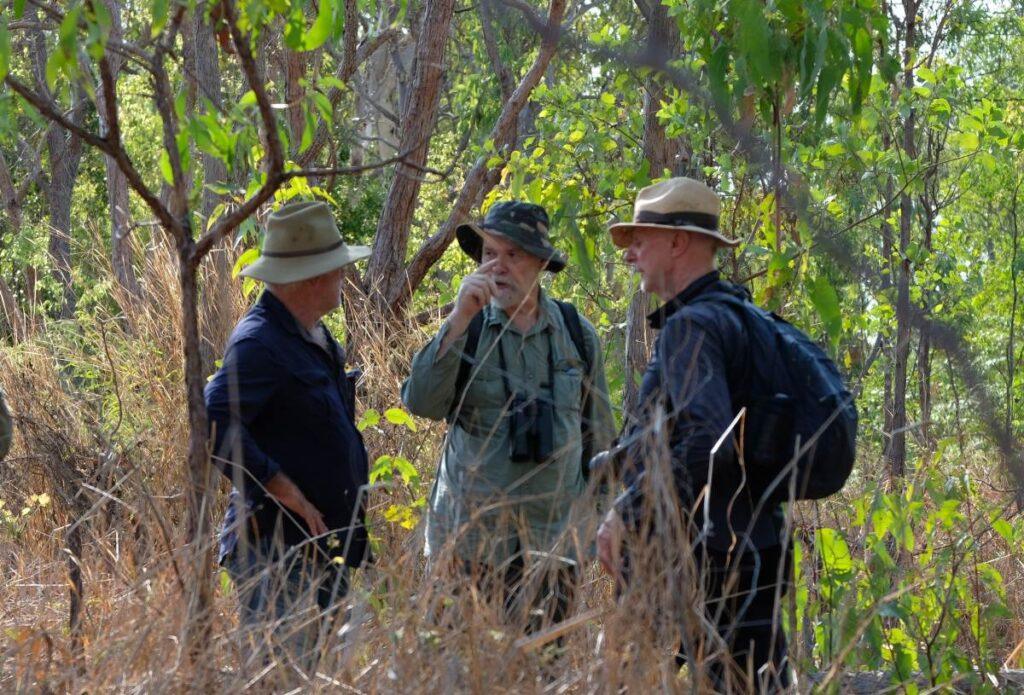
Figure 1. At 2CRU (from left): Graeme Sawyer, David Percival and John Brock.
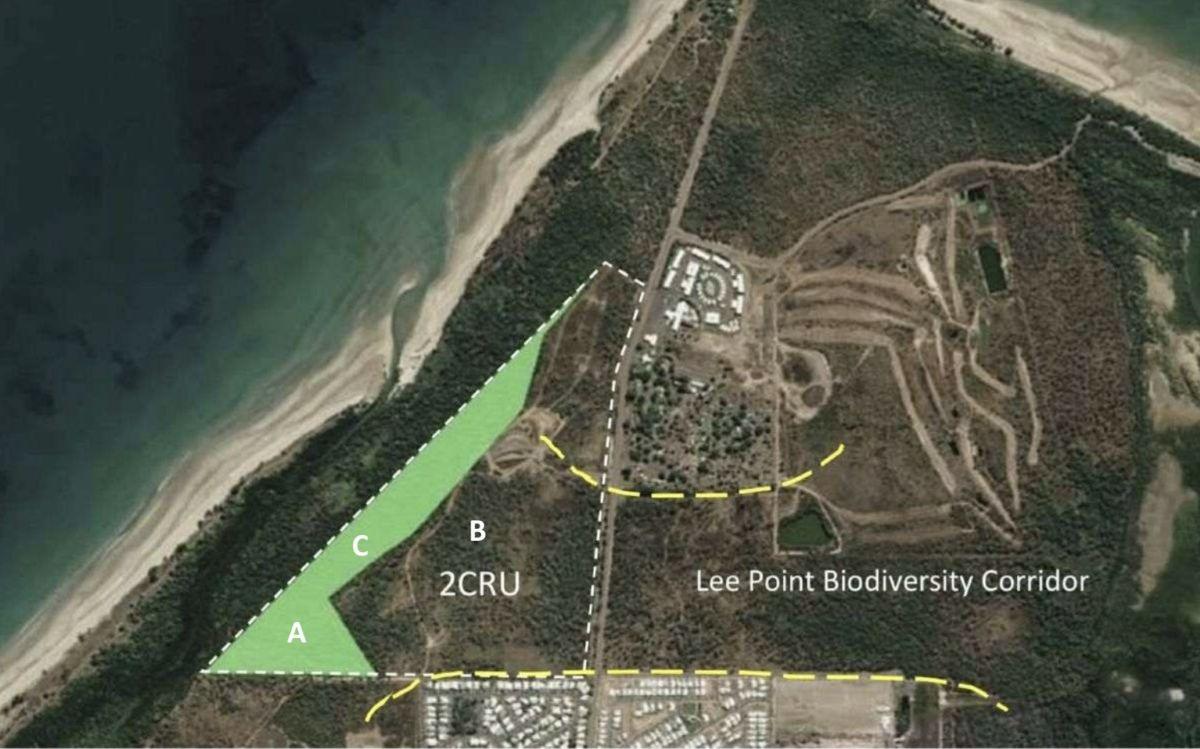
Figure 2. 2CRU offset area is in green, western edge is 1.7km.
Aim of the walk was to improve knowledge of plants in the 2CRU offset area* (Area A and C) and development area (Area B).
Survey methodology – The survey consisted of a two-hour walk that visited three areas, refer Figure 3. Plants species (excluding grasses and herbs) were identified in the field by John Brock.
People on the plant walk were; John Brock, Graeme Sawyer, David Percival, Gayle Laidlaw and Ian Redmond.
*Technically the 2CRU offset cannot be an offset because the offset area is part of 2CRU that has already been set aside for conservation – the “2CRU offset area” term is already in common use.
Map of surveyed areas in 2CRU
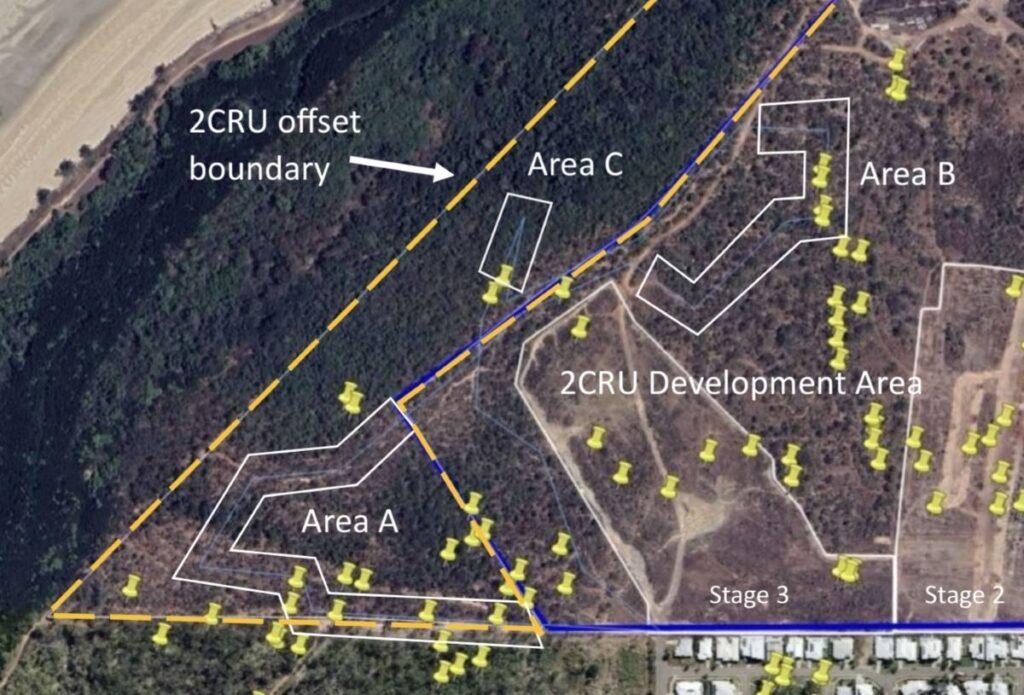
Figure 3. White Area A & B were surveyed for plant species, yellow pins are large eucalypts from a 2023 survey.
Stage 2 and 3 was bulldozed in 2023-24.
Survey Results
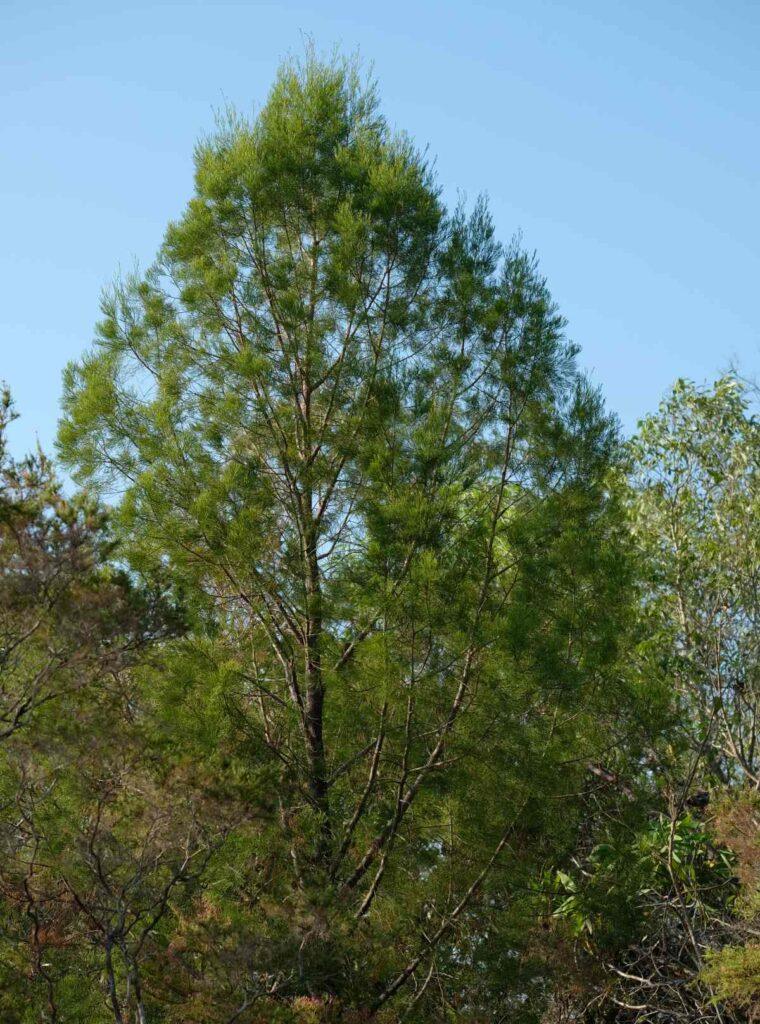
Figure 4. Cypress Pine (Callitris intratropica) in Area B regrowth.
Area A – 2CRU offset area – woodland, survey distance ~0.7 km
Recorded 41 plant species. The survey went through a small seasonal creek. Previous photos relevant to Area A and C are posted here.
Area B – 2CRU development area – woodland, survey distance ~0.4 km. Recorded 33 plant species. The area has had few fires. The understorey in regrowth areas (no large eucalypts) and non-regrowth areas (have large eucalypts) was similar. Previous photos are posted here.
Area C – 2CRU offset area – monsoon rainforest, survey distance ~0.1 km. Fading light prevented a plant survey being undertaken but it was possible to confirm Area C as Monsoon Rainforest – an area without Eucalypts, Grevilleas, or Acacias (except Acacia auriculiformis).
Plant species recorded
Habitat |
Genus |
Species |
Common Name |
Area A offset |
Area B project |
Overstorey |
Acacia |
auriculiformis |
Black Wattle |
YES |
YES |
Overstorey |
Alstonia |
actinophylla |
Milkwood |
YES |
YES |
Overstorey |
Blakella |
bella |
Ghost Gum |
YES |
NO |
Overstorey |
Blakella |
polysciada |
YES |
NO |
|
Overstorey |
Brachychiton |
diversifolius |
YES |
? |
|
Overstorey |
Callitris |
intratropica |
Cypress Pine |
NO |
YES |
Overstorey |
Canarium |
australianum |
? |
? |
|
Overstorey |
Corymbia |
polycarpa |
YES |
? |
|
Overstorey |
Erythrophleum |
chlorostachys |
Ironwood |
YES |
YES |
Overstorey |
Eucalyptus |
miniata |
Woollybutt |
YES |
YES |
Overstorey |
Eucalyptus |
tetrodonda |
Stringybark |
YES |
YES |
Overstorey |
Melaleuca |
leucadendra |
Weeping Paperbark |
YES |
NO |
Understorey |
Abrus |
precatorius |
Crab’s Eye Vine |
? |
? |
Understorey |
Acacia |
dimidiata |
YES |
? |
|
Understorey |
Acacia |
holosericea |
YES |
YES |
|
Understorey |
Acacia |
lamprocarpa |
YES |
NO |
|
Understorey |
Acacia |
latescens |
NO |
YES |
|
Understorey |
Acacia |
mimula |
? |
? |
|
Understorey |
Acacia |
oncinocarpa |
? |
? |
|
Understorey |
Alyxia |
spicata |
YES |
YES |
|
Understorey |
Auranticarpa |
melanosperma |
? |
? |
|
Understorey |
Brachychiton |
megaphyllus |
Red-flowered Kurrajong |
YES |
YES |
Understorey |
Breynia |
cernua |
YES |
YES |
|
Understorey |
Bridelia |
tomentosa |
? |
? |
|
Understorey |
Buchanania |
obovata |
Green Plum |
YES |
YES |
Understorey |
Calytrix |
achaeta |
NO |
YES |
|
Understorey |
Calytrix |
exstipulata |
Turkey Bush |
YES |
YES |
Understorey |
Capparis |
umbonata |
Wild Orange |
YES |
YES |
Understorey |
Cochlospermum |
fraseri |
Kapok Bush |
YES |
YES |
Understorey |
Cupaniopsis |
anacardioides |
Tuckeroo |
YES |
NO |
Understorey |
Cycad |
armstrongii |
Cycad |
YES |
? |
Understorey |
Denhamia |
obscura |
YES |
YES |
|
Understorey |
Diospyros |
calycantha |
YES |
? |
|
Understorey |
Dolichandrone |
filiformis |
YES |
NO |
|
Understorey |
Drypetes |
deplanchei |
YES |
YES |
|
Understorey |
Exocarpus |
latifolius |
Native cherry |
YES |
YES |
Understorey |
Flagellaria |
indica |
YES |
YES |
|
Understorey |
Glycosmis |
trifoliata |
NO |
YES |
|
Understorey |
Grevillia |
decurrens |
YES |
YES |
|
Understorey |
Grevillia |
dryandri ssp dasycarpa |
YES |
YES |
|
Understorey |
Jasminum |
molle |
Jasmine |
YES |
? |
Understorey |
Livistonia |
humilis |
Sand Palm |
YES |
YES |
Understorey |
Micromelum |
minutum |
NO |
YES |
|
Understorey |
Pandanus |
spiralus |
Pandanus |
NO |
YES |
Understorey |
Parsonia |
velutina |
? |
? |
|
Understorey |
Persoonia |
falcata |
Milky Plum |
YES |
YES |
Understorey |
Petalostigma |
pubescens |
Quinine Tree |
YES |
? |
Understorey |
Sersalisia |
sericea |
Pouteria |
YES |
NO |
Understorey |
Smilax |
australis |
YES |
YES |
|
Understorey |
Stenocapus |
acaciodes |
NO |
YES |
|
Understorey |
Sterculia |
quadrifida |
Peanut Tree |
YES |
YES |
Understorey |
Strychnos |
lucida |
Strychnine Tree |
YES |
YES |
Understorey |
Syzygium |
eucalyptoides ssp bleeseri |
White Bush Apple |
YES |
NO |
Understorey |
Tabernaemontana |
orientalis |
NO |
YES |
|
Understorey |
Terminalia |
ferdinandiana |
Billy Goat Plum |
NO |
YES |
Understorey |
Tinospora |
smilacina |
Snake Vine |
YES |
? |
Discussion
Woodland plant species – More plant species were recorded in Area A than Area B because a greater area was surveyed – per hectare, plant diversity is expected to be similar.
Gamba Grass – Both Area A and B had patches of high-density Gamba Grass that need to be eradicated.
Regrowth Areas – In 1944, 2CRU had nearly all of its woodland. Most of the land clearing at 2CRU took place in the early 1960’s, approx. 65 years ago, refer Figure 4 below.
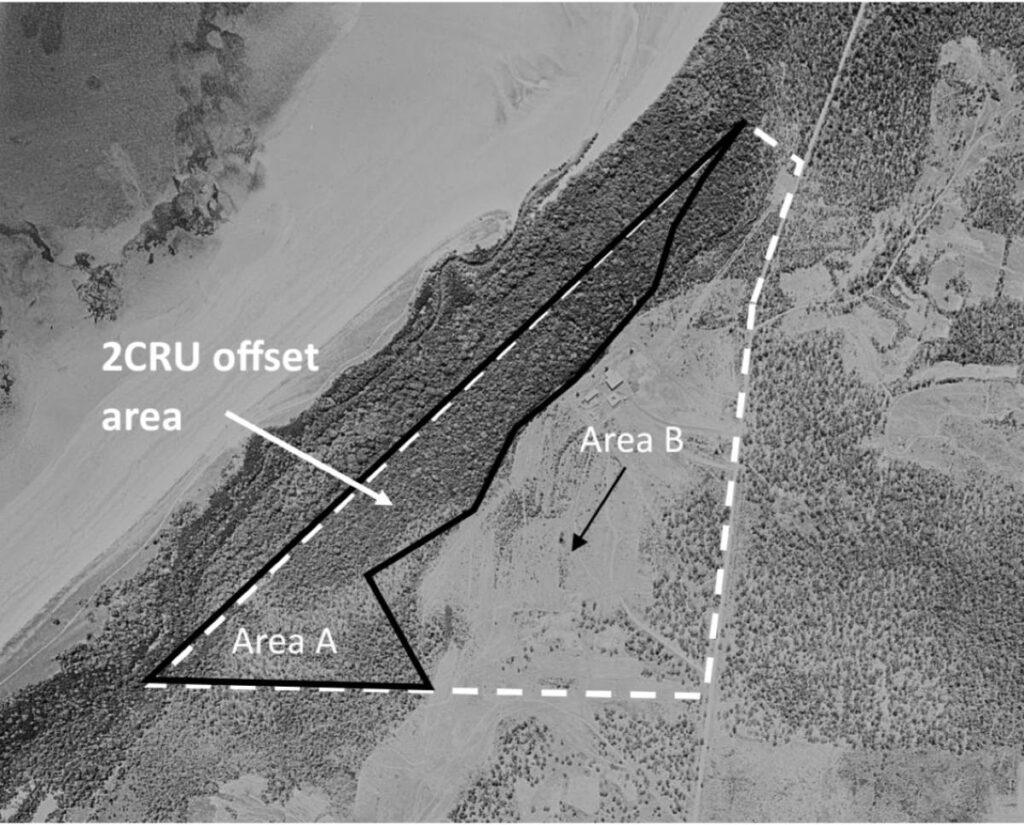
Figure 5. 2CRU in 1963 (white dashed line), Area A is in offset area, Area B is in planned development area.
Area A – the northern part had no large eucalypts (refer Figure 3). This may be due to shallow soils observed in the area. Past clearing was not evident on aerial photography – refer: old growth trees.
Area B – consisted of regrowth areas and areas not cleared (still had large eucalypts) based on aerial photos and tree diameter. As of 2026, the current tree diameter at breast height for a regrowth eucalypt was generally less than 20cm… read more
Understorey habitat was similar in regrowth areas and areas with large eucalypts (areas not cleared).
Findings
- Areas A and B (refer Figure 2) was woodland and held a similar diversity of plant species.
- Regrowth areas – Understorey habitat was similar in regrowth areas and areas with large eucalypts (areas not cleared).
- Area C was Monsoon Rainforest.