(Updated 12 May 2026)
Executive summary – Preliminary evaluation for 4 Darwin sites – Draft Report (4 sites)
The Australian Government’s Lee Point housing project is one of the most controversial and unpopular housing projects in Darwin’s history. It continues to attract adverse local and national media attention. This draft report proposes an alternative site that (8) community groups believe will solve the current problems and be well received by the public.
The taxpayer is currently underwriting a $400M defence and community housing project at Lee Point. To date, this housing project has produced expensive lots and no affordable housing. In addition to being an unproductive use of taxpayer money, the project is deeply unpopular with the Darwin community. It will have a significant impact on the natural and cultural heritage and is strongly opposed by the Larrakia people (traditional owners of Darwin).
As a result of community dissatisfaction, (8) community groups evaluated two alternative sites and the Lee Point site. The Lee Point site was found to be unsuitable for housing thousands of people. A Draft Report (3 sites) at Appendix D was provided to the Australian Government in July 2025.
In February 2026, the Australian Government announced that it would be divesting (68) defence sites as part of the Defence Estate Audit recommendations. Three defence sites to be sold in Darwin are – Stokes Hill Fuel Installation (near Darwin CBD), Defence Establishment Berrimah (DEB) and Kowandi North (near Holtze). The three sites were reviewed and the DEB site was chosen for further evaluation.
This Draft Report (4 sites) evaluates the DEB site and includes information from the previous Draft Report (3 sites). It recommends that the DEB site be used for the Defence Housing Australia (DHA) housing project that is currently located at Lee Point.
A high-level rating summary of the (4) sites is shown below.
High-level summary rating table for 4 sites
Aspect |
Defence Establishment Berrimah (DEB) |
NorthcrestBerrimah |
Holtze |
Lee Point |
Social |
Good |
Good |
Good |
Very Poor |
Environmental |
Good |
Very Good |
Fair |
Very Poor |
Economic |
Very Good |
Fair |
Good |
Poor |
Governance |
na |
Fair |
Good |
Very Poor |
Area available for new housing lots (does not include existing lots). |
90 ha |
120-140 ha |
150-200 ha |
90 ha |
The DEB site is preferred instead of Lee Point because it:
- is well located near existing infrastructure, public transport and defence bases;
- has potential to provide low-cost housing lots in support of affordable housing;
- has no identified heritage issues (to date); and
- is owned by Defence (vacant since 1939).
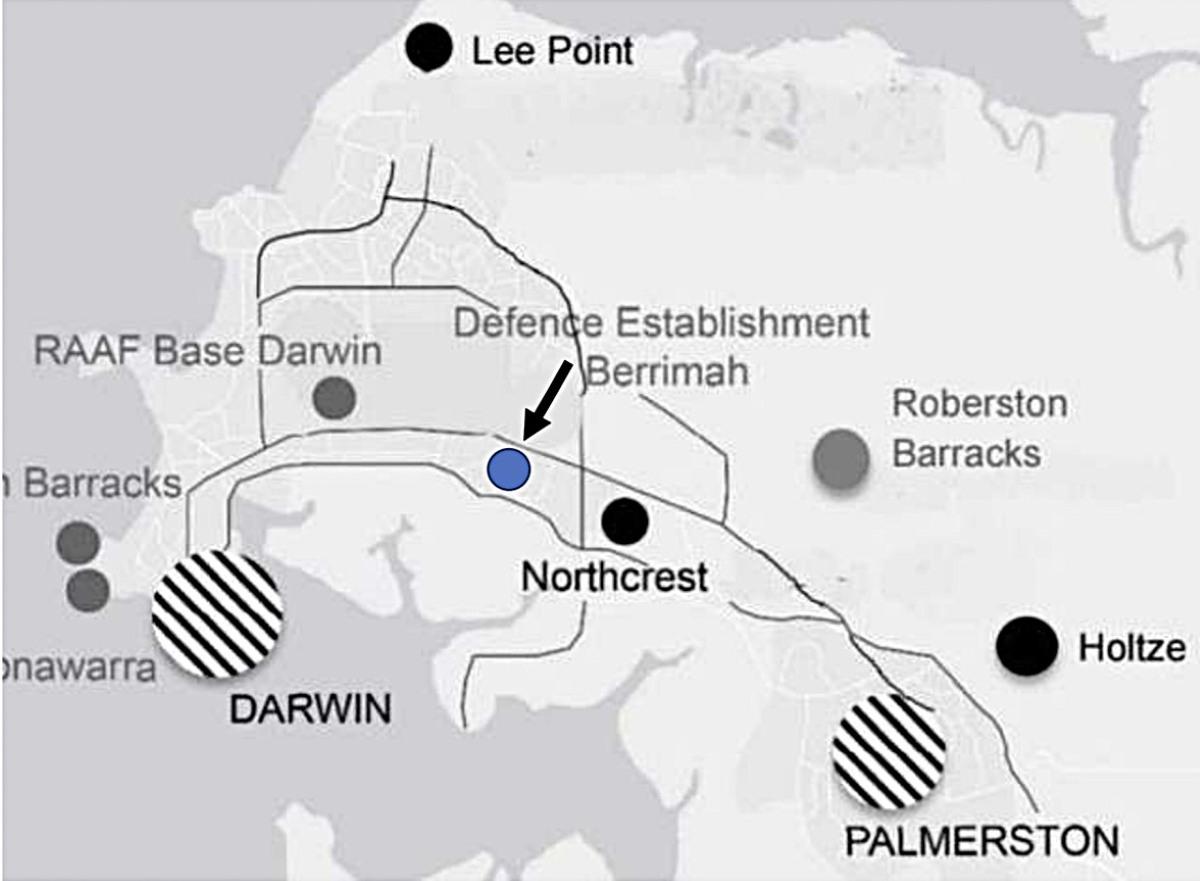
Location of 4 sites; Defence Establishment Berrimah, Northcrest, Holtz and Lee Point. Roberston Barracks is the main defence base.
Other options for the DHA housing project are also discussed in this Report. They include disused defence land at Kowandi North (vacant since 2013), near Holtz, and other sites near the Stuart Highway and defence bases.
Preliminary evaluation of 4 Darwin sites for
defence and community housing –
Draft Report (4 sites)
(including Defence Establishment Berrimah)
CONTENTS
1.0 Introduction
2.0 Why housing needs to go elsewhere (not at Lee Point)
3.0 Evaluation summary rating tables
4.0 Discussion
5.0 Summary
Appendix A – References
Appendix B – Kowandi North – brief desktop assessment
Appendix C – Site Evaluation for DEB
Appendix D – Draft Report (3 sites)
1.0 Introduction
The taxpayer is currently underwriting a $400M defence and community housing project at Lee Point, located 17km from Darwin CBD.
To date, this defence project has produced expensive lots and no affordable housing. In addition to being an unproductive use of taxpayer money, it will have a significant impact on the natural and cultural heritage of Darwin.
The Lee Point housing project includes 200 lots for defence personnel and up to 600 lots for community houses. Defence Housing Australia (DHA) is delivering this project and has completed approximately 100 lots.
In February 2026, it was announced that three defence sites are to be sold in Darwin – Stokes Hill Fuel Installation (near Darwin CBD), Defence Establishment Berrimah (DEB) and Kowandi North (near Holtze). The three sites were reviewed and the DEB site was chosen for further evaluation. Kowandi North, is briefly assessed at Appendix B.
Other options for housing defence personnel, not evaluated here, are briefly discussed at (REF 1).
This preliminary evaluation (4 sites), while guided by sustainability principles from Infrastructure Australia, has been simplified due to limited time and resources. It compares (4) Darwin sites: DEB (Berrimah), Northcrest (Berrimah), Holtze and Lee Point and recommends a preferred site.
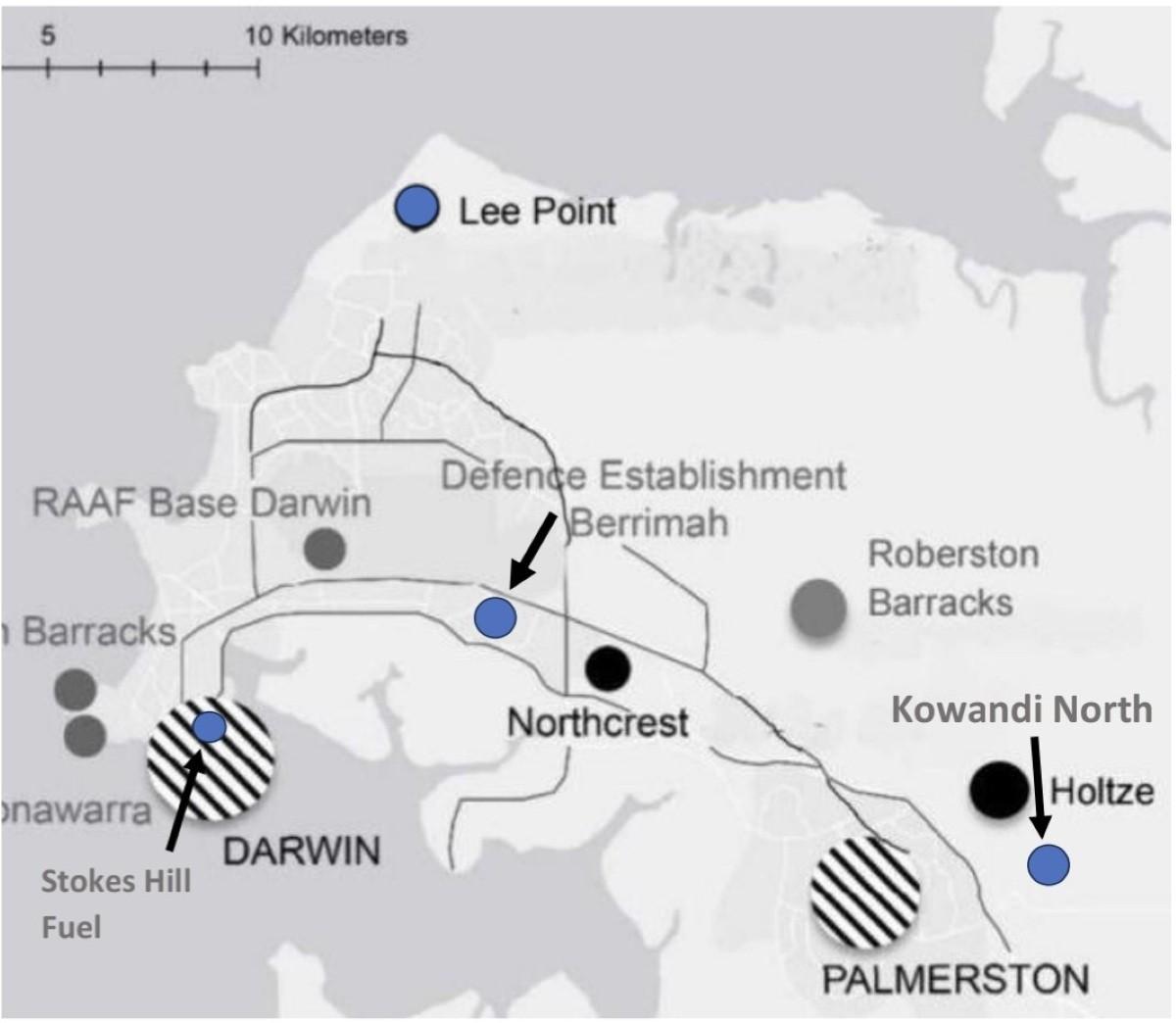
Fig 1. Location of 4 sites; Defence Establishment Berrimah, Northcrest, Holtz and Lee Point. Roberston Barracks is the main defence base.
The (8) Darwin community groups supporting this draft report include: Environment Centre of the NT (ECNT), Larrakia – Danggalabba Traditional Owners (in principle support), Keep Top End Coasts Healthy (KTECH), Birdlife Top End, NT Field Naturalists, PLan – Planning Action Network, Biodiversity Watch and Friends of Lee Point.
A final report is to issued once all groups have responded. No major changes are expected.
2.0 Why housing needs to go elsewhere (not at Lee Point)
The reasons why the Lee Point site is unsuitable include:
2.1 Social
Lee Point/Binybara (the land) is a place of great cultural and ecological importance to the Larrakia people. A place of hunting and ceremony, which contains both tangible and intangible aboriginal cultural heritage. Clearing of land at Lee Point harms Larrakia cultural heritage.
Lee Point has over half of the Casuarina Coastal Reserve, a small national park. This park is the most visited park/reserve in the NT because of its natural beauty, rich biodiversity and accessibility, refer (REF 2). A major housing development will severely impact people’s enjoyment and use of Lee Point.
The Lee Point housing project has not produced any affordable housing nor is it likely to. Its location does not lend itself to affordable housing (REF 3).
2.2 Economic
Lee Point is at the end of the water, electricity, road network and likely to trigger expensive upgrades to these networks. Traffic congestion problems already exist from past housing projects in the area and will worsen with more people living at Lee Point (REF 4).
The tourism revenue at Lee Point/Binybara from birdwatching, cultural activities etc. has great potential. However, to realise this potential it is critical that the natural and cultural heritage of the area is conserved.
The cost of living (due to increased travel costs) will be higher at Lee Point than other sites, refer Fig 1 map.
2.3 Environmental
Darwin has one remaining wildlife corridor (REF 5). The Lee Point housing site is important because it contains a significant proportion of the old-growth trees in this wildlife corridor. Charles Darwin University believes that Lee Point is vital habitat (REF 6) for the endangered Black-footed Tree-rat species and other endangered species eg. Gouldian Finch.
Lee Point beach is an internationally significant migratory shorebird site and the most important shorebird site in Darwin. According to Birdlife Top End (who monitor shorebirds), migratory shorebird numbers at Sandy Creek, Lee Point have declined over the last 20 years due to increased disturbance from recent nearby housing projects eg Lyons. Housing thousands of people at Lee Point will significantly increase human disturbance impacts on (7) threatened shorebird species.
2.4 Governance
Prior to 2020, less than 15% of northern suburb residents were aware that thousands of people were to be housed at Lee Point. The 2015 Lee Point Area Plan was flawed due to inadequate consultation and having DHA (as the developer) create the plan – a clear conflict of interest (REF 7).
Calls for a moratorium and for the Lee Point housing project to go elsewhere.
The Lee Point housing project has been plagued by years of controversy and delay. Protests and legal challenges are ongoing with the Darwin community opposed to housing thousands of people at Lee Point. This deeply unpopular project has affected people’s confidence in the future of Darwin.
Numerous calls have been made to Government and include:
- October 2021 – City of Darwin letter to the NT Government to place a moratorium on the current Lee Point housing project until the NT Planning Commission completes a new Area Plan for Lee Point
- October 2022 – a petition signed by ~4,500 people to the NT Government to place a moratorium on the current Lee Point housing project until the NT Planning Commission completes a new Area Plan for Lee Point
- July 2023 – open letter by 300 scientists to halt Lee Point works and engage with Larrakia Traditional owners
- September 2023 – a signed recommendation by 220 delegates from the Society of Ecological Restoration (SER) conference to find an alternative location
- March 2026 – a petition signed by ~1200 people urging City of Darwin not to accept further subdivisions at Lee Point.
- April 2026 – City of Darwin letter to the Australian Government (in progress) requesting a Senate inquiry into the DHA Housing Project at Lee Point
The NT Government Nightcliff By-election in March 2026 saw 80% of the first preference votes go to candidates (including Territory Labor) supporting the call for a moratorium on the DHA Lee Point housing project until the NT Planning Commission completes a new Area Plan for Lee Point.
Note:
Further information on:
- Affordable housing and benefits of relocation is at (REF 8)
- Planning for Lee Point and calls for a moratorium (REF 9)
- A list of campaigns to protect Lee Point are at (REF 10)
3.0 Evaluation summary rating tables
This report (4 sites), which includes the DEB site, is a continuation of the Draft Report (3 Sites) published in July 2025.
Appendix C has the DEB site evaluation.
Appendix D has the evaluation of Northcrest, Holtz and Lee Point.
The evaluations for the 4 sites have been summarised in the two rating tables below:
High-level summary rating table – 4 Darwin sites for defence and community housing
Aspect |
Defence Establishment Berrimah (DEB) |
NorthcrestBerrimah |
Holtze |
Lee Point |
Social |
Good |
Good |
Good |
Very Poor |
Environmental |
Good |
Very Good |
Fair |
Very Poor |
Economic |
Very Good |
Fair |
Good |
Poor |
Governance |
na |
Fair |
Good |
Very Poor |
Area available for new housing lots (does not include existing lots). |
90 ha |
120-140 ha |
150-200 ha |
90 ha |
Fig 2. This table compares (4) sites for housing defence personnel, refer Fig 1 map.
Summary rating table – 4 Darwin sites for defence and community housing
ASPECT |
DEB Berrimah |
NorthcrestBerrimah |
Holtze |
Lee Point |
Comments (for more information see Draft Report and +section below) |
Social |
|||||
Affordable housing |
Good |
Good |
Good |
Very Poor |
All sites, except Lee Point are well located for affordable housing.Lee Point has expensive lots and no affordable housing. |
Community wellbeing |
Good |
Good |
Good |
Poor |
All sites except Lee Point are close to frequent public transport and near to defence bases.Lee Point project adversely impacts on community’s enjoyment of Lee Point plus has problems of traffic congestion, school location, biting insects, sewage odours. |
Cultural heritage |
Good |
n/a |
n/a |
Very Poor |
DEB has the support of Larrakia of Danggalabba Traditional owners.Berrimah and Holtze not assessed.The Lee Point project is strongly opposed to by Larrakia people (traditional owners of Darwin). |
Environment |
|||||
Natural heritage |
Good |
Very Good |
Fair? |
Very Poor |
DEB and Holtz clear some habitat. Northcrest has no clearing impact.The Lee Point project clears over half the old-growth trees from Lee Point significantly impacting on Darwin’s last wildlife corridor (Darwin’s biodiversity), and threatens endangered species. |
Carbon emissions |
Very Good |
Very Good |
Fair |
Very Poor |
Lee Point has increased car travel (emissions) for defence personnel. Also see Natural heritage above. |
Economic |
|||||
Cost of Living |
Good |
Good |
Good |
Poor |
All sites except Lee Point are well located for affordable housing, public transport and near Darwin’s main defence base.Lee Point results in increased travel costs and possibly a second car.Lee Point’s high-cost lots excludes low to middle income people access to the government’s “help to buy” scheme. |
Cost effectiveness |
Very Good |
Fair |
Good |
Very Poor |
DEB and Lee Point is government owned. Holtze is mostly government owned. Northcrest is privately owned.All sites except Lee Point are well located to main infrastructure and frequent public transport services.Lee Point is at the end of the water, electricity, road grid, and likely to trigger significant upgrades in these grids.Traffic congestion problems exist from past housing projects and are expected to worsen with more people at Lee Point. |
Opportunities for business |
Fair |
Fair |
Fair |
Poor |
All sites except Lee Point are located near CBDs that may help stimulate CBD growth.The Lee Point project reduces potential eco-tourism opportunities from nature and cultural activities at Lee Point. |
Governance |
|||||
Community engagement |
n/a |
Fair |
Good |
Very Poor |
DEB does not have an Area Plan.Northcrest and Holtze Area Plans were created independently. Lee Point Area Plan was created by the developer (DHA).For Lee Point, most Darwin residents did not know about housing at Lee Point prior to 2020 and are now opposed to it. Larrakia (traditional owners of Darwin) want the housing to go elsewhere. |
Fig 3. This table compares (4) sites for housing defence personnel, refer Fig 1 map.
Notes
- All four sites were visited, however, access to the Holtz and DEB sites had limited public access.
- Ratings refer to the whole of the sites. Kowandi North would rate higher on natural heritage if development was focused around cleared area, refer Appendix B.
4.0 Discussion
The Lee Point housing site problems and opportunities to rectify are discussed in the following sections:
- Community
- Financial
- Reputation
- Opportunities
4.1 Community
The defence and community housing project at Lee Point is deeply unpopular with the community for many reasons, refer Fig 3 above. The project has divided the Darwin community and created mistrust in the divestment process of disused defence sites, particularly where heritage is concerned.
Cultural heritage
Larrakia people are frustrated and angry about the clearing of land at Lee Point. There are many other sites available closer to the defence bases, refer Fig 4 below and (REF 1).
Natural heritage
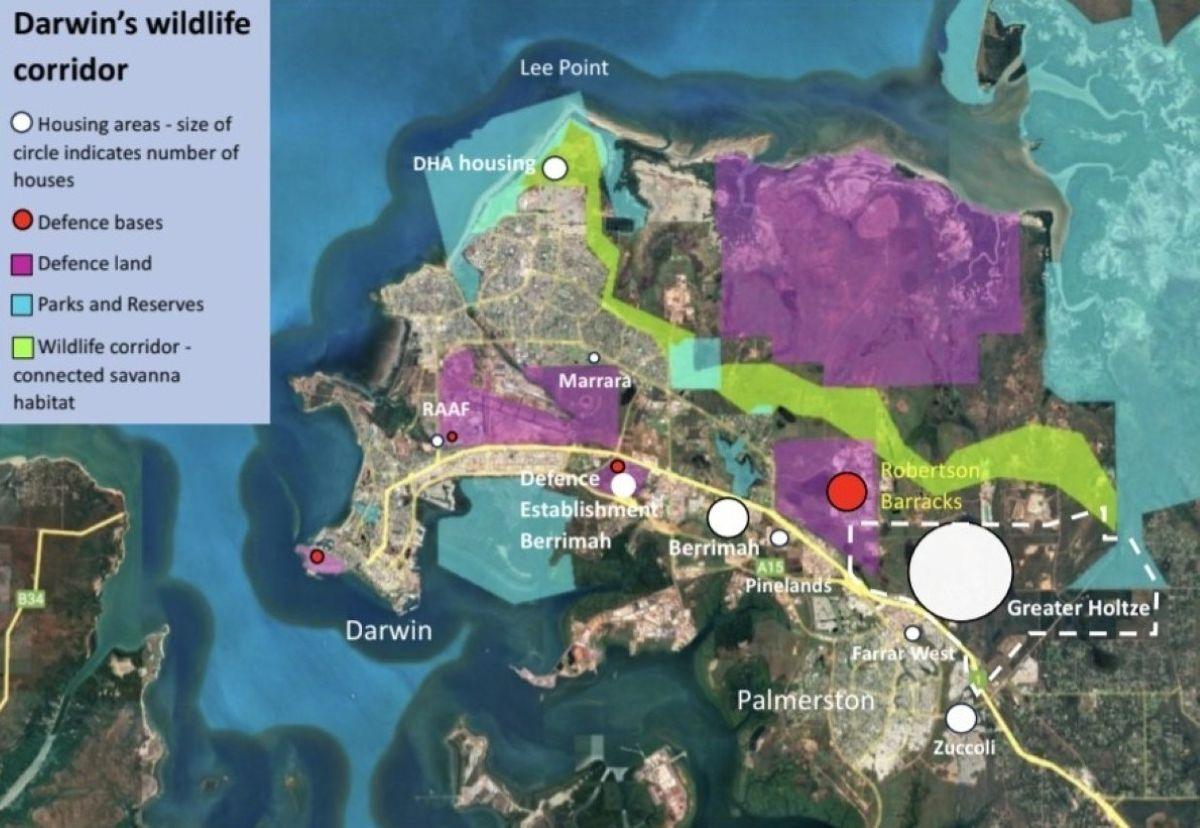
Fig 4. Darwin wildlife corridor (in green) and housing areas in Darwin.
Governments around the world are spending large sums of money to regreen their cities and bring back biodiversity. For biodiversity, the lowest-cost approach by far is to conserve existing wildlife corridors (connected habitat).
Darwin has one remaining wildlife corridor, refer Fig 4, and the Lee Point site is a crucial part of it. A small national park (declared in 2024) now exists on the western side of the Lee Point site. The potential impacts from the Lee Point housing project on the park’s land and marine environment have yet to be fully assessed.
The protection of the Lee Point site and corridor needs to be a high priority.
Darwin’s housing crisis
There is an acute and well documented shortage of social and affordable housing in Darwin. Government needs to provide, and encourage, the supply of low-cost and well-located lots that affordable dwellings can be built on, in order to address the housing crisis.
Increasing the supply of high-cost lots eg. Lee Point, without providing any low-cost lots is counterproductive to addressing the housing crisis. It drives up prices in the housing construction industry without delivering any low-cost lots.
The DHA Lee Point housing project has the most expensive minimum lot cost of the major housing projects underway in Darwin (REF 1). It has not, nor is it expected to, produce any affordable housing, refer independent housing report (REF 2).
DEB and Kowandi North sites are well-located and have the potential for low-cost lots – something that Darwin urgently needs.
4.2 Financial
Australian Government debt is large and increasing. Approximately 70% of the Territory Government funding is provided by the Australian Government. Government has a duty to make best use of public resources to avoid increasing debt.
Lee Point is an urban sprawl, housing is located away from jobs, public transport and clears critical habitat. The negative impacts of an “urban sprawl” are well known and affect all three levels of government. The NT Government and City of Darwin are struggling to limit taxes and rates and can ill-afford to take on additional assets that incur high maintenance costs:
Roads – The traffic problems from housing developments at and near Lee Point are getting worse. Addressing this traffic congestion will be expensive and require Australian/NT Government funds (REF 4).
Sewage treatment – The treated sewage from the Leanyer sewage treatment pond facility overflows into Buffalo Creek. This creek is used by recreational fishermen. The sewage treatment ponds are at capacity and further upgrades to treatment capacity will be expensive.
Water and electricity – Lee Point is at the end of the Darwin water and electricity grid. Housing thousands of people at Lee Point means expanding the Darwin grid, an increase in capital and recurrent costs.
Housing defence personnel at DEB or Kowandi North sites is expected to have significantly lower whole of life costs for the taxpayer being near to existing infrastructure and services.
4.3 Reputation
The Australian Government spends significant funds each year recruiting defence personnel. These campaigns rely on Defence maintaining a good standing within the community.
Increasing threats to migratory shorebirds by housing thousands of people at Lee Point (increased human disturbance) compromises international agreements and Australia’s international reputation.
The majority of people in Darwin understand there are many sites along the Stuart Highway where the housing could be built instead of Lee Point. They hold Defence responsible for the unnecessary destruction of Lee Point. Continued clearing at Lee Point (vacant since early 2000’s) and knowing DHA could have built at DEB (vacant since 1939) or other locations will further damage Defence’s reputation.
The Lee Point housing project is one of the most controversial and unpopular housing projects in Darwin’s history due to its location. It continues to attract adverse local and national media attention.
4.4 Opportunities
The decision to use the disused land at Lee Point for a major housing project was a poor choice on many levels.
The sale of two major disused defence sites along the Stuart Highway, DEB and Kowandi North, provide a unique opportunity to rectify the deeply unpopular defence housing project at Lee Point.
For example, swapping the (unserviced) disused defence land at Lee Point for the DEB site is a viable option. The major investment to date in the Lee Point unserviced land (Stages 2 & 3) has been in purchasing stormwater pipes. Some of these pipes could be reused at the DEB site and the remainder sold (REF 8).
Relocating the DHA housing project to DEB would be highly regarded and supported by the Larrakia people (in principle) and Darwin community in general.
5.0 Summary
Choosing the disused land at Lee Point (vacant since early 2000’s) to house thousands of people was a poor decision on many levels.
The defence and community housing project at Lee Point is deeply unpopular with the community. This project has divided the Darwin community and created mistrust in the divestment process of disused defence sites, particularly where natural and cultural heritage is concerned.
The DHA housing project at Lee Point needs to be relocated and the DEB site is the preferred site because it:
- is well located near existing infrastructure, public transport and defence bases;
- has potential to provide low-cost housing lots in support of affordable housing;
- has no identified heritage issues (to date); and
- is owned by Defence (vacant since 1939).
Government needs to immediately cease the clearing works at Lee Point to prevent further harm to the natural and cultural heritage of Darwin.
Appendix A
References
REF 1 Alternative Sites – https://saveleepoint.org.au/feb-2026-alternative-sites-for-defence-housing/
REF 2 Lee Point – a special part of Darwin – https://saveleepoint.org.au/lee-point-apecial-part-of-darwin-nt/
REF 3 Independent housing report – https://saveleepoint.org.au/wp-content/uploads/2024/03/ATT-A-Lee-Point-DHA-independent-housing-report.pdf
REF 4 Traffic problems – https://saveleepoint.org.au/feb-2026-traffic-problems-getting-worse/
REF 5 Darwin Wildlife Corridor – https://saveleepoint.org.au/lee-point-protecting-critical-habitat-and-darwins-last-wildlife-corridor/
REF 6 Lee Point is vital habitat (ABC article 2023) – https://www.abc.net.au/news/2023-08-22/nt-darwin-developments-risk-extinction-lee-point-middle-arm/10275147
REF 7 Community consultation – https://saveleepoint.org.au/community-consultation-for-lee-point-zoning/
REF 8 Relocating and rescoping the Lee Point defence housing project- https://saveleepoint.org.au/april-relocating-rescoping-the-dha-housing-project/
REF 9 Planning for Lee Point – https://saveleepoint.org.au/planning-for-lee-point-darwin-nt/
REF 10 Protect Lee Point – https://protectleepoint.com/
Appendix B
Kowandi North – brief desktop assessment
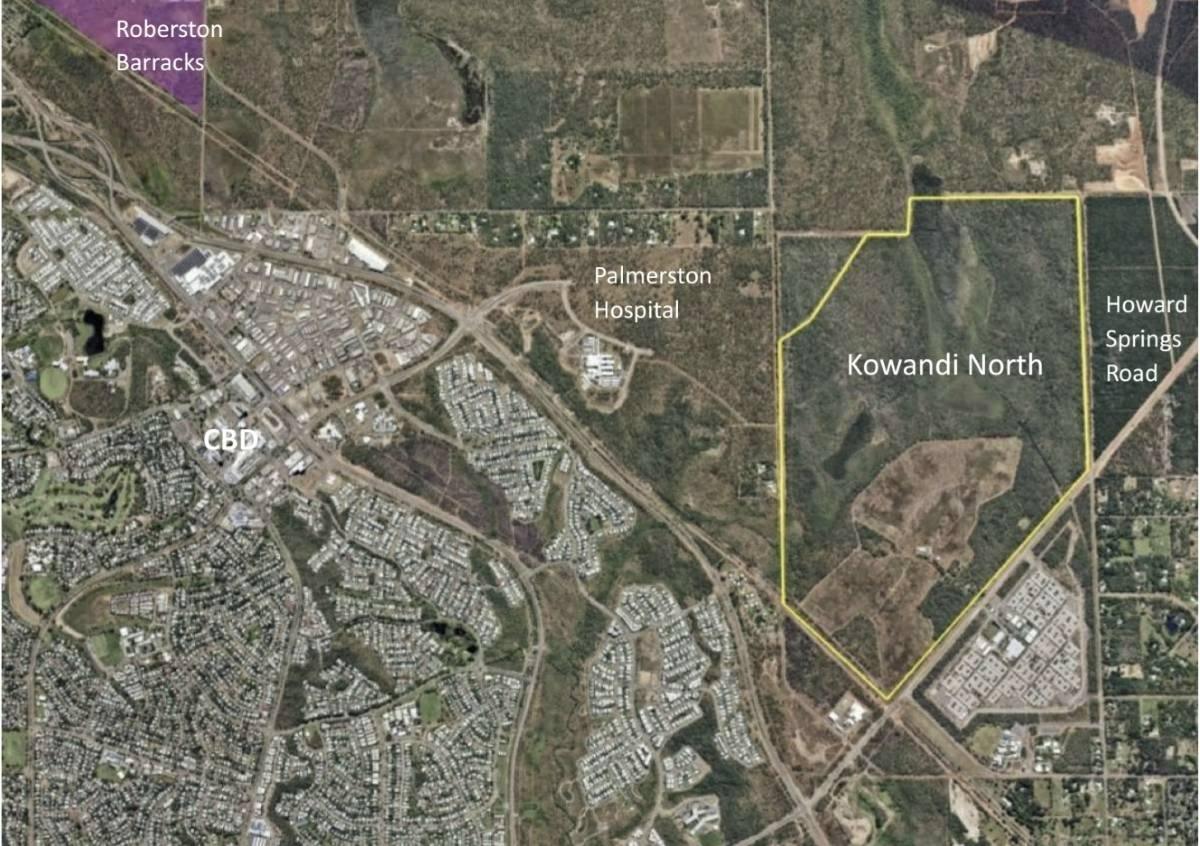
Site map of the (362ha) Kowandi North site and surrounds – based on Google Maps and Kowandi North link.
A significant proportion of the Kowandi North land appears to be low lying.
Approx 80 hectares have been cleared (refer map above) around the disused defence facility. The cleared land is on higher ground and may be suitable for a 90 ha housing site. If suitable, the Kowandi North site ratings would be comparable to the DEB site, refer Fig 2 in the above Preliminary Rating Summary.
Defence assessed History and Heritage concerns as NIL. The site has been vacant since 2013.
Note: No site visit or discussions with Larrakia traditional owners was undertaken for Kowandi North.
Appendix C
Site Evaluation for DEB
This section contains the DEB site evaluation.
Appendix D contains the Northcrest, Holtze and Lee Point site evaluations, refer to Draft Report (3 Sites) for a summary. The evaluation methodology from the Draft Report (3 Sites) is repeated here (Sec 1.0) for reference.
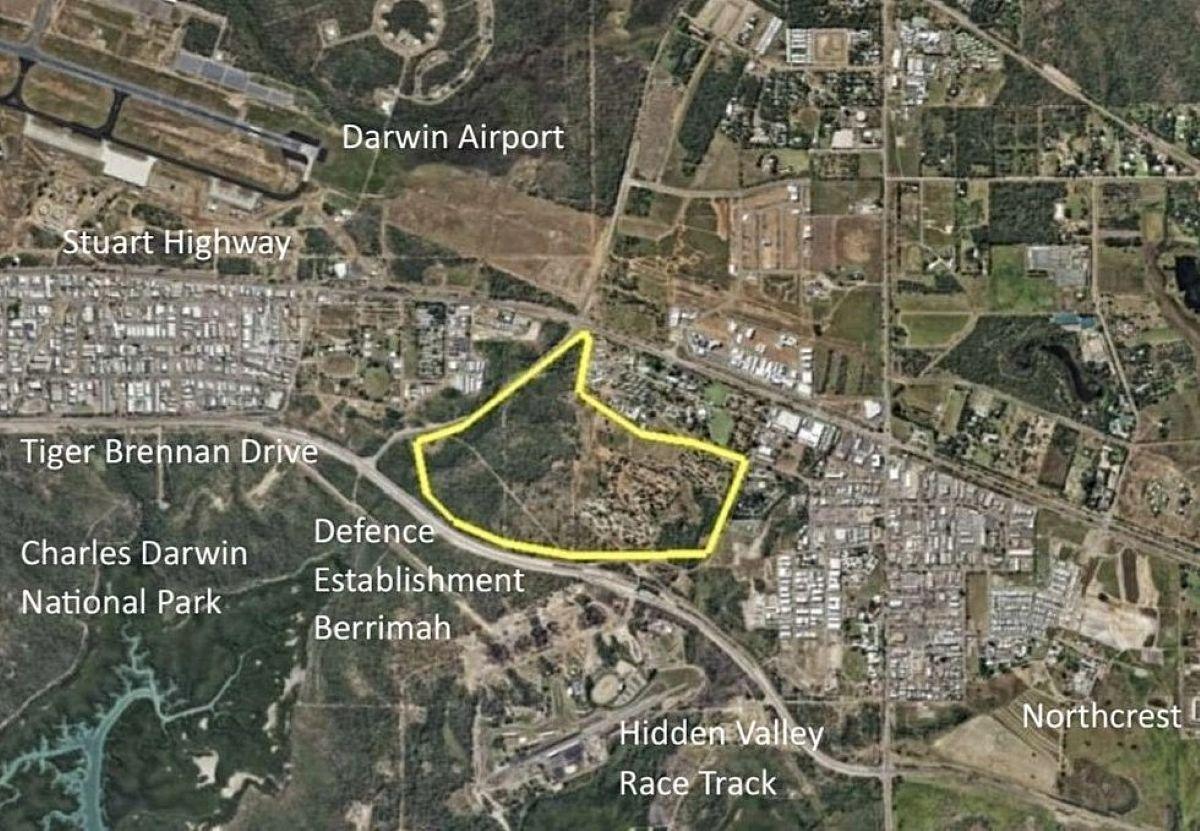
Site map of the (123ha) Defence Establishment Berrimah (DEB) site and surrounds – based on Google Maps
1.0 Evaluation methodology
The evaluation methodology for the 4 Darwin sites is broadly based on sustainability principles from Infrastructure Australia – government’s independent advisor on nationally significant infrastructure.
Sustainability refers to “meeting the needs of the present without compromising the ability of future generations to meet their own needs” and involves four components:
- social
- economic
- environmental
- governance
Rating these components can be an involved and complex task. Given the limited resources and time available, each component is broken into a small number of aspects and a simplistic rating system used. Each aspect is rated as:
- Very Good
- Good
- Fair
- Poor
- Very Poor
The rating of each aspect is based on the number of positive and negative points listed and associated comments. A rating with a question mark indicates a lack of information to make the rating.
Notes
- Ratings could change with a more detailed and comprehensive evaluation.
- Time and resources spent on collecting information has been prioritised to achieve a balanced and reasonable rating rather than to fully describe a problem or opportunity.
- Infrastructure Australia prefers a Multi-criteria analysis (MCA), a system that weights and rates many aspects to provide a comprehensive evaluation of different project options.
2.0 DEB Evaluation
The evaluation is done in four parts:
- Social
- Economic
- Environmental
- Governance
2.1 SOCIAL
Infrastructure Australia consider social outcomes relating to, but are not limited to, improving community health, liveability and wellbeing, social cohesion, gender equality, education, housing, and security.
To simplify the evaluation of social outcomes, three aspects were selected:
- affordable housing
- community wellbeing
- cultural heritage
Affordable housing
Site Rating – potential to create well located homes under $600k.
“Well located” under the National Housing Accord for the NT is defined as: housing that provides reasonable access to education, employment, essential services, transport, and/or infrastructure, as relevant to the regional and community context. Ref National Housing Accord schedules.
The Australian Government’s “Help to buy” scheme is set at $600k or less for Darwin. A basic Darwin house is worth ~$400k. This requires a lot to cost less than $200k to have house/land under $600k.
Infrastructure for all the lots e.g. roads, drainage, water, sewerage, and electricity are provided by the developer. In DHA’s case, it retains up to 30% of the lots for defence housing.
DEB – Affordable housing – GOOD
Positive
- Well located for public transport and other services
Negative – Nil
Comment
- Has potential to create low-cost lots for affordable housing
- It’s worth noting Holtz has created lots under $200k, Northcrest has not yet (but could)
Community wellbeing
Site Rating – potential to add to community wellbeing.
DEB – Wellbeing – GOOD
Positive
- Close to public transport
- Cycling options – defence bases, Darwin CBD, Palmerston CBD, Charles Darwin National Park
- Cost of living – refer Economic section
Negative – NIL
Comment
- Noise from Tiger Brennan Drive or Hidden Valley Drag Strip is not listed as a negative because buffers are expected to be included in the Area Plan.
- The Hidden Valley Drag Strip is over a kilometre away from most of the DEB site and located in a valley (helps reduce noise). The south-eastern corner of DEB site is the most exposed area to Drag Strip noise.
- It is assumed that approx. 75% of the 123ha site (~90ha), will be used for housing. This allows for a 100m buffer from Tiger Brennan Drive (nearest lane) plus the conservation of the western creek area and majority of the woodland area in the south-east for recreation.
Cultural Heritage
Site Rating – potential to maintain or meet the cultural needs of the Darwin traditional owners (Larrakia) for future generations.
Aboriginal cultural heritage is deeply connected to the land and sea. It contains both tangible elements – artifacts and sites, and intangible aspects – stories, songs and ceremonies.
“Free, Prior and Informed Consent” (FPIC) is a specific right for indigenous people that was adopted by the United Nations in 2007 as a crucial aspect of sustainable development. In maintaining or meeting the cultural needs of the Larrakia people it would be expected that FPIC would be sought before commencing any development.
DEB – Cultural Heritage – GOOD
Positive
- Supported in principle by Larrakia – Danggalabba Traditional owners
Negative – NIL
Comment
- Defence assessed site as having – NIL History or Heritage concerns.
- Defence is undertaking further consultations with key Larrakia people.
2.2 ENVIRONMENTAL
Infrastructure Australia consider environmental outcomes are related to, but not limited to, impacts on our atmosphere, land, oceans, seas, habitat, coasts, freshwater and biodiversity due to factors such as carbon emissions, use of natural resources, toxic materials, efficient use of resources, waste management and reforestation.
To simplify the evaluation of environmental outcomes, two aspects were selected:
- natural heritage
- carbon emissions
Natural Heritage
Site Rating – potential for ecologically sustainable development.
The Top End’s tropical savannas are globally significant – most of Kakadu National Park is made up of tropical savannas. The savannas are now in trouble, refer The State and Future of the Territory’s savannas, June 2025.
Many species, particularly mammals, that were once common and widespread, have disappeared from much of the Top End.
The Greater Darwin savannas have not been affected by the Gamba and Buffel Grass fires to the same extent as other Top End locations. Fringes of Darwin now contain some of the most biodiverse habitat left for native mammals in the Top End. It has been identified as being an important refuge for endangered species Ref ABC article – Aug 2023.
The Darwin refuge areas that are most valuable to mammals are the ones connected to the rural area. This is because some mammals need large areas for their survival e.g. endangered Black-footed Tree-Rat.
Berrimah has no connection to the rural area. Holtze’s connection is still to be determined by area planning. Lee Point is part of the last Darwin Wildlife Corridor, connected savanna habitat that runs across the north of Darwin to the rural area.
Natural Heritage – GOOD
Positives
- Majority of the area has been previously cleared
- Potential to improve the site with natural planting
Negatives – NIL
Comment
- Site has no connection to the rural area i.e. not suitable for a refuge for certain mammals.
- Separated from Charles Darwin National Park by a major 4 lane road.
- It has been assumed that approx. 75% of the 123ha site (~90ha), will be used for housing. This allows for 100m buffer from Tiger Brennan Drive (nearest lane) plus conservation of western creek area and majority of the south-eastern woodland. A site visit would be needed to better define these areas.
Carbon emissions
Site Rating – potential for mitigating emissions from a major housing development.
DEB – Carbon emissions – VERY GOOD
Positive
- reduced travel emissions, near to defence bases with cycling being an option
- close to public transport
- majority of the area has been previously cleared
Negative – NIL
2.3 ECONOMIC
Infrastructure Australia consider economic outcomes relate to, but are not limited to, productivity, employment, financial stability, consumption, production, innovation, wealth creation, international competitiveness, social mobility, and value for money.
To simplify the evaluation of economic outcomes, three aspects were selected:
- cost of living
- cost effectiveness
- opportunities for business
Cost of Living
Site Rating – opportunity to reduce individual’s cost of living.
DEB – Cost of Living – GOOD
Positive
- frequent public transport
- central location reduces transport costs
- well located for affordable housing
Negative – NIL
Comment
- Has potential to create low-cost lots for affordable housing
- Expected to half fuel costs for defence personnel compared to Lee Point
Cost effectiveness
Site Rating – optimising tax-payer infrastructure expenditure on capital and ongoing items while facilitating affordable dwelling supply.
DEB – Infrastructure cost effectiveness – VERY GOOD
Positive
- Adjacent to major water, electricity, and transport infrastructure running to Darwin City
- Land is owned by Australian Government
Negative
- NIL
Comment
- Southwestern corner is low lying and may not be suitable for development
Opportunities for business (wealth creation, innovation)
Site Rating – opportunity to grow business in Darwin.
Tourism is an important part of Darwin’s economy. A survey undertaken in 2022 found that 90% of travelers are looking for sustainable travel options and 50% were prepared to pay more for these options, refer Sustainable Tourism.
DEB – Opportunities for business – FAIR
Positive
- Should help invigorate Darwin and Palmerston CBD
Negative – NIL
2.4 GOVERNANCE
Infrastructure Australia consider governance outcomes are related to, but not limited to, inclusive governance mechanisms, effective community engagement, capacity building, transparency, and user focus.
To simplify the evaluation of governance outcomes, one aspect was selected:
- community engagement
Community engagement
Site Rating – how well the Area Plan reflects community long-term needs and wishes.
DEB – Community engagement – not available
Comment
- DEB site does not have an Area Plan.
- A Senate inquiry on the Management of Defence Estate Assets is underway.
- The DEB site has been used for temporary accommodation in the past.
- Consultation with the community on the DEB divestment started 20 April 2026.
Ratings could change with a more detailed and comprehensive evaluation.
Appendix D
Draft Report (3 sites) is a summary.
Full report available on request – contact friendsofleepoint@gmail.com